Cleveland, Ohio - January 2026
10 Predictions for Cleveland Businesses in 2026
Why the most human city in America is about to matter more than ever
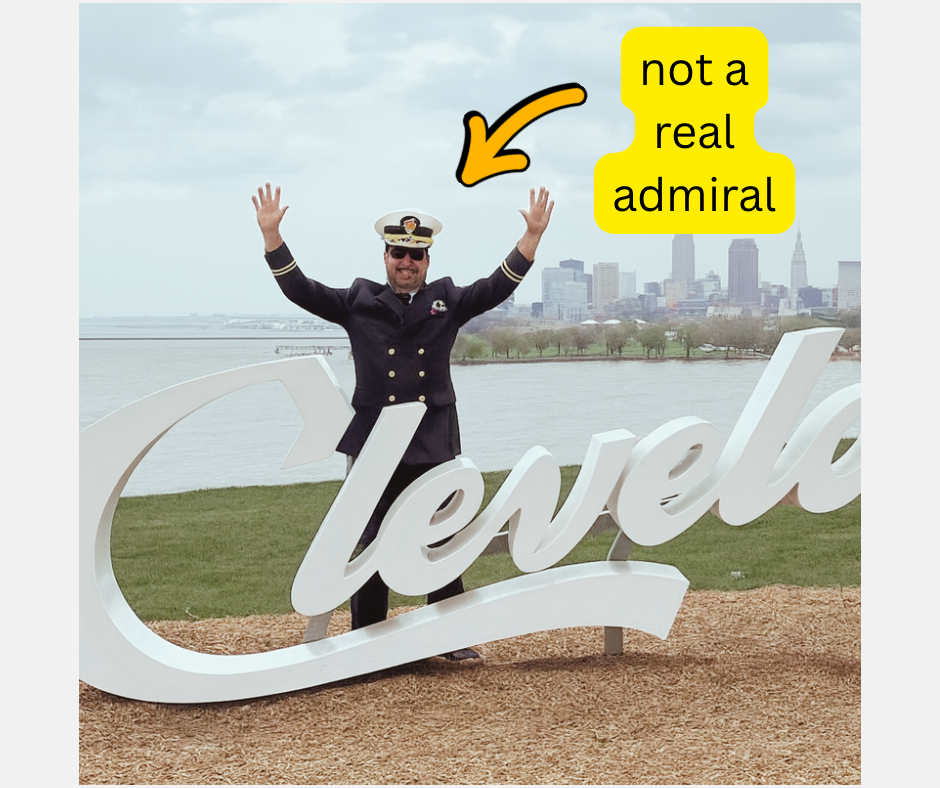
Jim Kukral
Admiral of the Cleveland Floaters
TL;DR
Cleveland is the most human city in America. That humanity is our edge. The businesses that thrive in 2026 won't be the ones chasing trends. They'll be the ones doubling down on real relationships, community roots, and the gritty creativity this city has always been known for.
Over the past year, Cleveland has seen a steady wave of business closures. Restaurants that were busy on weekends. Retail shops with loyal regulars. Places that felt established.
Suddenly closed. Poof. A Facebook post saying, "We're closing up shop."
It's heartbreaking.
For those that don't operate a Cleveland business everything seems fine on the surface. As the consumer you see the closures lighting up social media and think, "Man, I'm gonna miss shopping there; they had great stuff", or worse, "I get it, that place was overpriced and had terrible service."
But the reality is just like anywhere in America. Business is hard and the rules keep changing. And Cleveland businesses owners need to keep up if they want to survive.
Ohio City's Kyuu-juu closed after less than a year. Forest City Shuffleboard shut down its original location. Downtown nightlife staples like Inferno and Rum Runners went dark. Across Ohio, the Restaurant & Hospitality Alliance estimated hundreds of restaurant closures in 2025 alone. Margaritaville shuttered.
In contrast, other Cleveland businesses (not just bars and restaurants) rooted in Cleveland's community story continue to thrive and expand. Selling out events. Expanding thoughtfully. Building waiting lists.
How are they thriving? Why are they staying open when others are not?
Simply put; They understand the rules have changed. Consumers changed. The world changed. They understand that the competition isn't the bar down the street anymore. The competition is Netflix and comfort of the couch and warm blanket.
They understand that Amazon creates a frictionless buying experience that deters their customer from getting in the car and coming down to their shop. So they focus on creating their own experiences and moments. They focus on powerful storytelling.
Some will survive; Some won't. All in the same city. Same economy. Same consumer base.
That contrast is the story for 2026.
Despite social media hyperbole and panic, the reality is that the Cleveland business community is not collapsing. It is separating. And the reasons for this separation matters deeply. Because the reasons reflect how our city may be uniquely suited for the decade ahead.
Writers like John Skrtic have chronicled Cleveland's cycles of loss, reinvention, and resilience for years, reminding us that closures here are rarely the full story.
Our opinion: Cleveland is the most human city on earth.
That human quality, the grit, authenticity, mutual support, real-world relationships, all of that humanity, will shape what works and what doesn't in 2026.
Because relationships matter here. Word of mouth matters. Places become part of people's lives.
That human quality is a competitive advantage, not a sentimental one. So much so that Cleveland has the chance to lead the way for next decade. Not just in the Midwest, but for all of America.
But first, we've got some work to do.
As we move into 2026, here are ten predictions for Cleveland businesses based on what is already happening.
Buckle up, Cleveland.
Being Remembered Will Matter More Than Location
A business address still matters. But it no longer guarantees choice.
Clevelanders increasingly choose places they already remember. Places they have heard about. Places someone recommended. Places that feel familiar before the door ever opens.
Memorability is not just about a great product or a strong drink or a waterfront view. Cleveland customers expect those things. What separates businesses now is the experience layered on top of them.
Porco's Tiki Lounge is a good example. Walking through the door feels like stepping into another world. It is immersive, specific, and unmistakable. That experience creates a memory customers carry with them, and it keeps Porco's top of mind even though it is not centered in the city's busiest corridors.
Location still helps in some cases. But it does not protect businesses the way it once did. The Flats has proven that. Few areas offer better visibility or natural advantages, yet multiple high-profile closures there show that location alone is not enough.
What has changed is how decisions are made. Customers often decide where they are going before they leave home, guided by memory, reputation, and recommendation. Restaurants like Johnny Mango and Bo Loong attract locals and visitors alike not because of perfect positioning, but because they are talked about, shared, and recommended.
What this means: In today's Cleveland, being remembered through experience, story, and community connection matters more than convenience alone. Location still plays a role, but memory is what earns the choice.
The Middle Will Feel the Squeeze Hardest
The middle rarely wins attention. People remember the extremes. The places that feel like a clear value. The places that feel like a clear upgrade.
What gets forgotten is everything in between.
Today's consumers make faster, sharper decisions than they used to. Faced with too many choices and tighter discretionary spending, they simplify. They look for signals that help them decide quickly.
Am I choosing the affordable option (Drug Mart), or the special one (Heinens)? If you're from Cleveland, you get exactly what I'm saying here.
That framing shows up everywhere, from retail to dining to services. It is not about luxury versus cheap. It is about clarity of value.
The problem for many Cleveland businesses is the growing grey space in the middle. Places that are competent. Places that are fine. Places that do nothing wrong, but also give customers no clear reason to choose them.
That middle ground is where pressure is building fastest.
In a market like Cleveland, where spending is thoughtful and loyalty has to be earned, being "good enough" is no longer neutral. It creates hesitation. And hesitation often sends customers somewhere else.
What this means: In a selective market like Cleveland, being in the middle is no longer a safe position. Businesses that do not clearly signal why they exist and who they are for will feel the squeeze first.
Experience Over Excellence
The table stakes are higher than they used to be.
Good service, quality products, and fair prices are now baseline expectations. They are assumed. They no longer separate one business from another.
What does separate businesses is experience. The moment someone mentions to a friend. The reason they bring someone back next time. The memory that lingers after the bill is paid.
Many businesses are still operating under rules that worked before the pandemic but no longer hold. They assume novelty alone will create repeat visits. But novelty fades quickly if there is no reason to return.
Margaritaville is a useful example. The first visit delivered exactly what was promised. The theme was clear. The setting was immersive. But once that box was checked, there was little reason to come back or to bring someone else. The music was familiar. The environment was static. The food and drinks were serviceable, but not distinctive enough to overcome the lack of depth. Cleveland made its decision over time.
Contrast that with places that function as social anchors.
Great Lakes Brewing Company is not just a brewery. It is a gathering place. A spot where people meet, celebrate milestones, and return again and again because it feels woven into the city's fabric. Cleveland's oldest bar, The Harbour Inn, stays alive through thick and thin because of its unmistakable 216 grit and charm.
In Tremont, The Banyan Tree has spent more than two decades curating local artists and craftsmanship that reflect Cleveland's identity. It feels personal. It feels intentional. It feels like home. That emotional connection creates loyalty that product quality alone cannot.
What this means: Businesses that give customers something to talk about stay relevant longer than those that rely on quality alone. Experience creates memory, and memory drives return.
Events Will Outperform Traditional Ads
When a city brings people together in real life, recall and loyalty grow faster than through any scrolling ad.
In 2026, more Cleveland businesses will shift energy toward small gatherings, collaborations, and in-person moments. Not because advertising or social media disappear, but because face-to-face trust forms faster.
Cleveland has always worked this way.
The West Side Market has served the community for more than a century, not because of marketing campaigns, but because it is experienced together. It is built on daily human interaction. Small conversations. Familiar faces. Shared routines. Oh, and Frank's Brats! It remains one of the clearest examples of how Cleveland functions best when people gather.
Even seasonal experiences like gatherings aboard The Holiday show how powerfully Cleveland responds when people are brought together intentionally, creating shared moments that linger long after the event ends.
That same principle shows up across the city today.
Destination Cleveland regularly convenes hundreds of partner businesses through meetups and working sessions designed to encourage collaboration and shared growth. These rooms create relationships that no ad placement can replicate.
Community initiatives like Share the River show how opening access to shared spaces creates connection, pride, and participation in ways no digital campaign can replicate.
Local media brands like Cleveland Vibes operate the same way. They are not just online personalities. Their storytelling connects locals to one another and to Cleveland businesses through events and shared experiences that turn culture into something participatory. That participation strengthens the entire ecosystem.
Clevelandish plays a similar role by turning local attention into real-world momentum, using storytelling, amplification, and in-person activation to help Clevelanders discover and support what's happening here, together.
The same pattern appears at a smaller scale. Let'sGoCLE hosts regular in-person gatherings for small business owners and entrepreneurs who want to learn, collaborate, and help each other grow. The value is not in the content alone. It is in the room.
Cleveland responds to presence. It always has.
What this means: Cleveland is a city built on rooms, not feeds. Belonging converts more reliably than impressions, and businesses that invest in real gatherings will earn deeper loyalty than those relying on ads alone.
Authentic Human Presence Will Outperform Polish
In 2026, Cleveland customers will gravitate toward what feels real, local, and present.
This city has always responded to people more than polish. Familiar faces. Places that feel lived in. Businesses that show up consistently and feel connected to the neighborhoods they serve.
That presence takes many forms. Imperfect signage on a State Road storefront that has been operating for decades. Owners who attend community events and recognize regulars by name. Local voices like Stay Beautiful America, whose simple act of interviewing the city and highlighting neighborhood businesses has built trust through consistency and proximity.
Places like Jeff's Candy Shop embody this kind of presence, where familiarity, consistency, and simple human connection matter more than branding trends or production value.
Production value matters less here than participation.
Clevelanders value interaction. Conversation. Recognition. This is a city shaped by loyalty and shared experience, not surface-level branding. Businesses that feel human are easier to trust and easier to return to.
Community-driven brands like I'm From Cleveland reinforce this dynamic by celebrating local identity in a way that feels participatory rather than performative.
Longstanding brands like Malley's Chocolates illustrate this clearly. Founded in 1935, Malley's succeeds not because it looks modern or optimized, but because it feels unmistakably Cleveland. It reflects local tastes, local rhythms, and local pride.
That contrast becomes clearer as national chains struggle to maintain the same connection. Many Clevelanders increasingly choose local coffee shops like Roasted and Rising Star because the purchase feels personal. The money stays close. The faces are familiar. The relationship is tangible.
In Cleveland, that matters.
What this means: Cleveland responds to authenticity faster than polish. Businesses that show up as human, local, and present will build deeper loyalty than those relying on surface-level perfection.
If these ideas resonate, the Cleveland Marketing Summit on January 23, 2026 is where we'll dig into what this means for your business.
Consumer Caution Will Show First in Discretionary Spending
Much of the conversation around Cleveland business struggles has focused on rising prices. That explanation is not wrong, but it is incomplete.
Cleveland has always been value conscious. Price matters here. Meeting customers where their budgets are will always be part of long-term success, especially in a period of sustained inflation.
But cost alone does not explain what is happening.
Clevelanders still choose upscale experiences when they feel justified. Restaurants like Marble Room continue to draw diners. Brands like FOUNT still sell handmade goods at premium prices. The presence of inflation has not eliminated discretionary spending. It has made it more selective.
That selectivity shows up first in categories like dining out, nightlife, and impulse retail. These are the areas where people pause, compare, and decide whether an experience feels worth it. Many families feel this tension daily as everyday expenses rise and choices feel heavier.
What is happening is not a pullback from spending. It is a narrowing of choices.
In tighter moments, Cleveland patrons do not stop participating. They become more intentional. They choose fewer places. They return to the ones that feel meaningful. Businesses that offer more than a transaction tend to stay on the list. Those that feel interchangeable fall off.
This is separation, not collapse.
What this means: People will continue to spend in Cleveland, but with greater intention. Businesses that create emotional value, shared moments, and a sense of purpose will earn those dollars more often than those competing on price alone.
Partnerships Will Become a Survival Strategy
The fastest-growing Cleveland businesses in 2026 will not grow alone.
Shared identity, shared moments, and shared community networks are proving more effective and more durable than siloed marketing efforts. Clevelanders respond when businesses work together. Collaboration feels natural here, not forced.
That shift is already visible across the city.
On Larchmere, the Corner Shop Collective brings multiple entrepreneurs under one roof, giving each business built-in visibility and shared foot traffic. The model lowers individual risk while strengthening the street as a whole.
Partnerships also show up in more informal ways. Stem Handmade Soaps collaborates with Rising Star Coffee Roasters and Sophie La Gourmande, connecting complementary brands through shared audiences and shared values. These relationships feel organic because they are rooted in proximity and mutual support.
Some partnerships are less formal but equally effective. Golf Cart Girl CLE has become a familiar presence across events and neighborhoods by showing up consistently and collaborating widely. That visibility compounds because it is built through people and participation, not isolated promotion.
Event entrepreneurs like Ishmael Khadair embody this connective energy by moving fluidly between events, brands, and communities, proving that in Cleveland, people themselves often become the platform that partnerships grow from.
Across Cleveland, the pattern repeats. Retail paired with events. Food paired with creators. Service businesses embedded in community experiences. Growth increasingly comes from overlap, not isolation.
What this means: As attention becomes more expensive, shared audiences will outperform solo marketing. Cleveland businesses that collaborate intentionally will grow faster and more sustainably than those trying to do everything on their own.
Expansion Will Look Different
In 2026, growth for Cleveland businesses will look less like adding locations and more like deepening one.
For years, expansion was treated as the clearest signal of success. More locations meant momentum. But that assumption is being reconsidered. Rising costs, staffing challenges, and changing consumer habits have made scale harder to sustain without dilution.
Depth is starting to beat breadth.
Many Clevelanders point to MELT Bar and Grilled as a cautionary example. What began as a distinctive, beloved concept struggled to maintain the same experience as it expanded rapidly. The issue was not demand, but consistency. Growth outpaced the ability to preserve what made the original special.
The same dynamic plays out nationally. Large-format concepts like Topgolf continue to expand, but additional locations rarely deepen emotional connection. Novelty fades. The experience stays the same. Expansion adds reach, not attachment.
Even within Cleveland, customers often sense the difference. Many still argue that Slyman's Restaurant downtown delivers a different experience than its suburban counterpart. Familiarity and history matter, and they are hard to replicate at scale.
By contrast, businesses with deep roots are choosing focus over sprawl. Dave's Market renewing long-term leases at Shaker Square, as reported by Axios Cleveland, signals confidence in place and community rather than scattershot growth.
Operators like Sam McNulty, whose work includes building and sustaining places such as Market Garden Brewery, illustrate how growth in Cleveland can come from layering purpose, culture, and community rather than chasing scale alone.
In a more selective market, expansion without meaning becomes fragile. Concentration, consistency, and presence are proving more durable.
What this means: One place people love will outperform multiple places they forget. In Cleveland, focus is becoming a stronger growth strategy than expansion.
Neighborhood Growth Will Be Uneven
Cleveland's recovery is not moving at the same pace everywhere.
Different neighborhoods are rebounding based on different factors, and that unevenness will continue through 2026. Growth is no longer driven by proximity alone. It is driven by clarity. Who a neighborhood is for. What it offers. And who is actively stewarding that vision.
Neighborhoods do not thrive on momentum by accident. They grow when leadership, business owners, and community organizations align around a shared direction. When that alignment exists, customers feel it. When it does not, even well-located areas struggle to sustain activity.
Some neighborhoods show what works.
Places like the Van Aken District succeed because they are built around a defined audience and a consistent mix of retail, food, and events. People know why they go there, and they return with intention.
Areas such as the Gordon Square Arts District experience cycles, but they continue to recover because they operate with a clear identity. Cultural anchors, programming, and long-term planning give businesses something to plug into and build around.
Other neighborhoods face a harder climb. Without clear leadership, consistent activation, or a shared sense of purpose, businesses are left operating independently. In those environments, even strong concepts struggle to convert interest into repeat visits.
The result is not failure. It is fragmentation.
Some neighborhoods will continue to attract residents, events, and regular foot traffic. Others will lag until direction catches up with potential.
What this means: Cleveland businesses that align with neighborhood identity, local leadership, and real community activity will outperform those waiting for a universal recovery. In 2026, growth will follow clarity, not geography.
Cleveland Closure Narratives Will Shift to Opportunity
There will be more business closures in Cleveland in 2026. That part is unavoidable.
What will change is how those closures are understood.
For years, closures have been treated as symbols of decline. They are framed as endings rather than transitions. That framing is easy to reach for, but it misses what tends to happen next in Cleveland.
This city has a long history of reinvention driven by people, not polish. When one business closes, it often creates space for another that is more aligned with how Clevelanders live, gather, and spend. New concepts emerge that are built around experience, collaboration, and identity rather than replication.
Chroniclers like Dan Hanson at ClevelandPeople.com have spent years documenting Cleveland through its people, reinforcing the idea that change here is rarely an ending, but a transition.
That pattern is already visible across neighborhoods. Grassroots efforts take root. Local operators step in. Community members invest not just money, but time, energy, and pride. What replaces a closure is rarely identical, but it is often more intentional.
Closures still matter. They are disruptive. They are emotional. They leave gaps. But they are not the final chapter.
In Cleveland, they are often the reset.
The city's strength has never been perfection or stability. It has been resilience, creativity, and a willingness to rebuild in ways that feel human and locally grounded.
What this means: In 2026, Cleveland will increasingly view closures as inflection points rather than endpoints. The focus will shift toward what grows next, and how opportunity emerges from transition.
Why Cleveland's Human Advantage Matters
Cleveland is not a faceless market. It is a city where people support places they feel connected to. Where relationships influence decisions. Where pride is real, not performative.
In a decade increasingly driven by automation and optimization, Cleveland's humanity is becoming its edge. Time to lean into it.
The businesses that thrive in 2026 will feel obvious in hindsight.
People will say, "Of course they're doing well."
The reasons will be simple.
They chose to be remembered.
They chose to create moments.
They chose to engineer experiences.
They stayed human.
Sources and Local References
This commentary draws on publicly reported data, local journalism, and widely observed Cleveland business patterns, including:
- Cleveland Scene reporting on recent restaurant and nightlife closures, including Kyuu-juu, Forest City Shuffleboard, Inferno, and Rum Runners
- Ohio Restaurant & Hospitality Alliance estimates on restaurant closures statewide in 2025
- Downtown Cleveland Alliance visitation, recovery, and activation reports
- Destination Cleveland partner programs, tourism strategy, and event-based economic development (thisiscleveland.com)
- Axios Cleveland reporting on Dave's Market lease renewals and neighborhood investment patterns
- Ideastream Public Media coverage of Cleveland's economic shifts, neighborhood dynamics, and small-business environment
- Historical and brand information for locally rooted Cleveland businesses including Great Lakes Brewing Company, Malley's Chocolates, MELT Bar and Grilled, Slyman's Restaurant, and the West Side Market
- Neighborhood development and cultural district examples including the Van Aken District and Gordon Square Arts District
- Local culture, media, and community platforms including Cleveland Vibes, Clevelandish, Stay Beautiful America, and Let's Go CLE
- Long-form Cleveland commentary and historical perspective from John Skrtic, Cleveland Magazine contributor
If these predictions spoke to you
You need to be in the room.
The Cleveland Marketing Summit is a half-day gathering for business owners who understand the rules have changed. 50 seats. Real conversations. No fluff. January 23, 2026 at Forest City Brewing.
Claim your seat →